The AIDS Quilt in Keene
What is the AIDS Quilt?
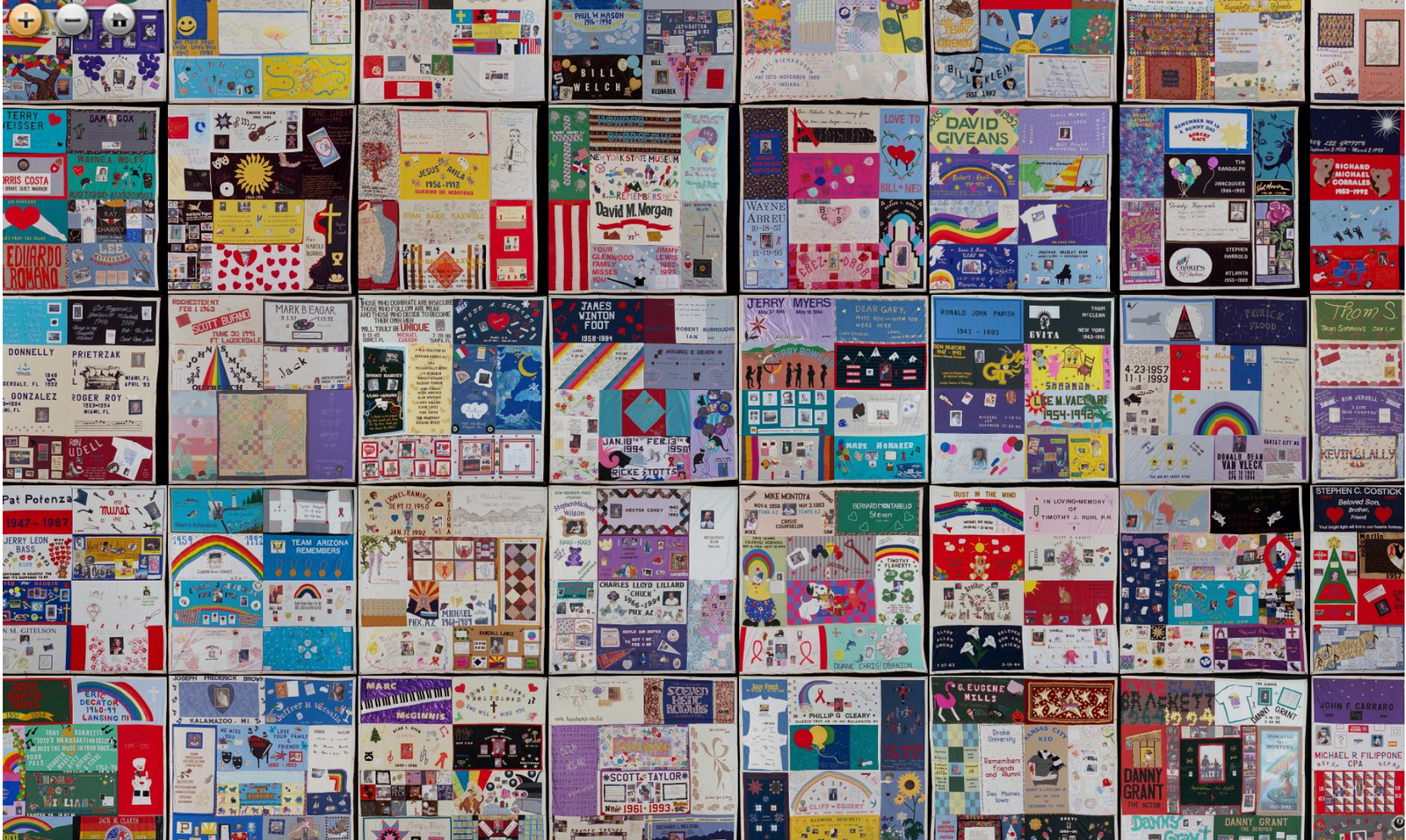
The AIDS quilt is a heart-wrenching and deeply emotional tribute to those who have lost their lives to HIV/AIDS. When you stand in front of the quilt, you can feel the weight of the loss and the pain of the families and loved ones who created each panel. There are over 50,000 12’x12’ panels dedicated to more than 110,000 people lost to AIDS.
The quilt is a beautiful and haunting masterpiece that overwhelms you with a sense of sadness, yet also inspires you with the incredible strength and resilience of those who have fought against this disease.
Every panel on the quilt represents a life that was cut short, a family that was left shattered, and a community that was forever changed. Each panel is filled with memories, emotions, and love, as people pour their hearts into honoring the lives of their loved ones.
When you see the quilt, you can't help but feel the impact of HIV/AIDS on our world. But you also feel a sense of hope, as you witness the power of community and the incredible resilience of the human spirit. The AIDS quilt is a reminder that even in the face of tragedy, love and compassion can still prevail.
The Story of the Red Ribbon
Ribbon symbols have been used throughout history to denote certain events that engaged the public. The red ribbon as a symbol of AIDS awareness was conceived in the spring of 1991 at the Visual AIDS Artists Caucus. Painter Frank Moore, a Caucus member, lived in upstate New York where a neighbor displayed yellow ribbons in support of their daughter's safe return from the Persian Gulf. "It convinced me that it could be a metaphor for AIDS as well," he said. "It just seemed there were a lot more people ready to support action against AIDS than were publicly identified."
Moore has been quoted as saying the color red was chosen for its "connection to blood and the idea of passion - not only anger, but love, like a valentine." The Caucus intended that the red ribbon symbol:
1. Remain anonymous as individuals and to credit the Visual AIDS Artists Caucus as a whole in the creation of the Red Ribbon Project, and not to list any individual as the creator of the Red Ribbon Project;
2. Keep the image copyright free, so that no individual or organization would profit from the use of the red ribbon;
3. The Red Ribbon should be used as a consciousness raising symbol, not as a commercial or trademark tool.
The AIDS Ribbon symbolizes:
Care and Concern: For those who are living with HIV/AIDS, for those who are ill, for those who have died and for those who care for and support people who are directly affected.
Hope and Support: Symbolizing the successful search for a vaccine and cure to end the pandemic and improve quality of life for those living with the virus, the continuing education of those not infected, and compassion for those who have lost friends, family members or loved ones to AIDS.
The Red Ribbon was first worn publicly by actor Jeremy Irons at the 1991 Tony Awards. Moore, one of the founding members of Visual AIDS – the artists’ arm of ACT UP - died from AIDS on April 23, 2002.
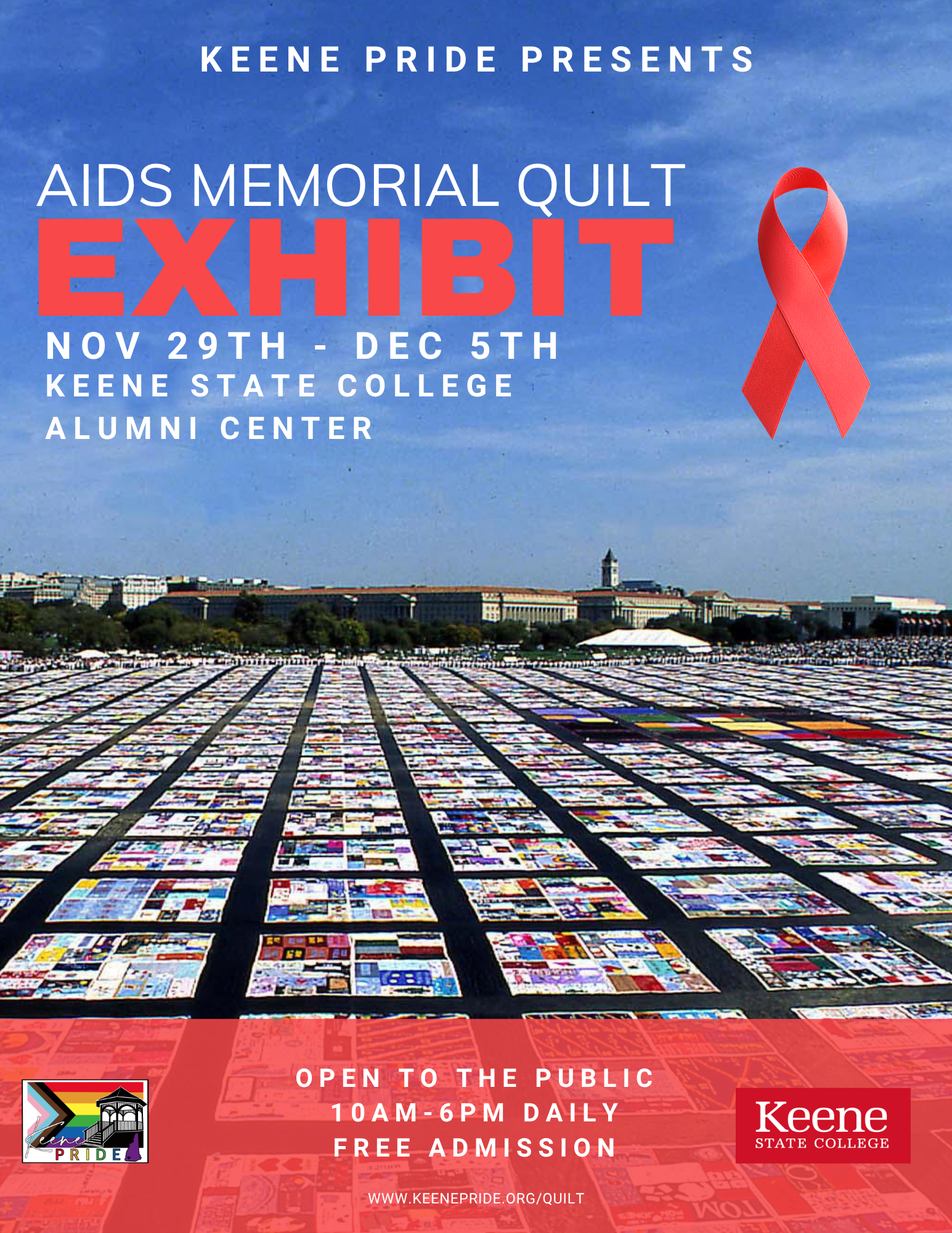
There will be eight 12’x12’ panels on display, including quilts from the families of local residents we lost to AIDS.
The exhibit is completely free and open to the public from Sunday, November 29th 2026 to Saturday, December 5th 2026. Public viewing hours are 1pm-6pm daily.
Keene State College Alumni Center
229 Main Street.
Keene, NH 03431